
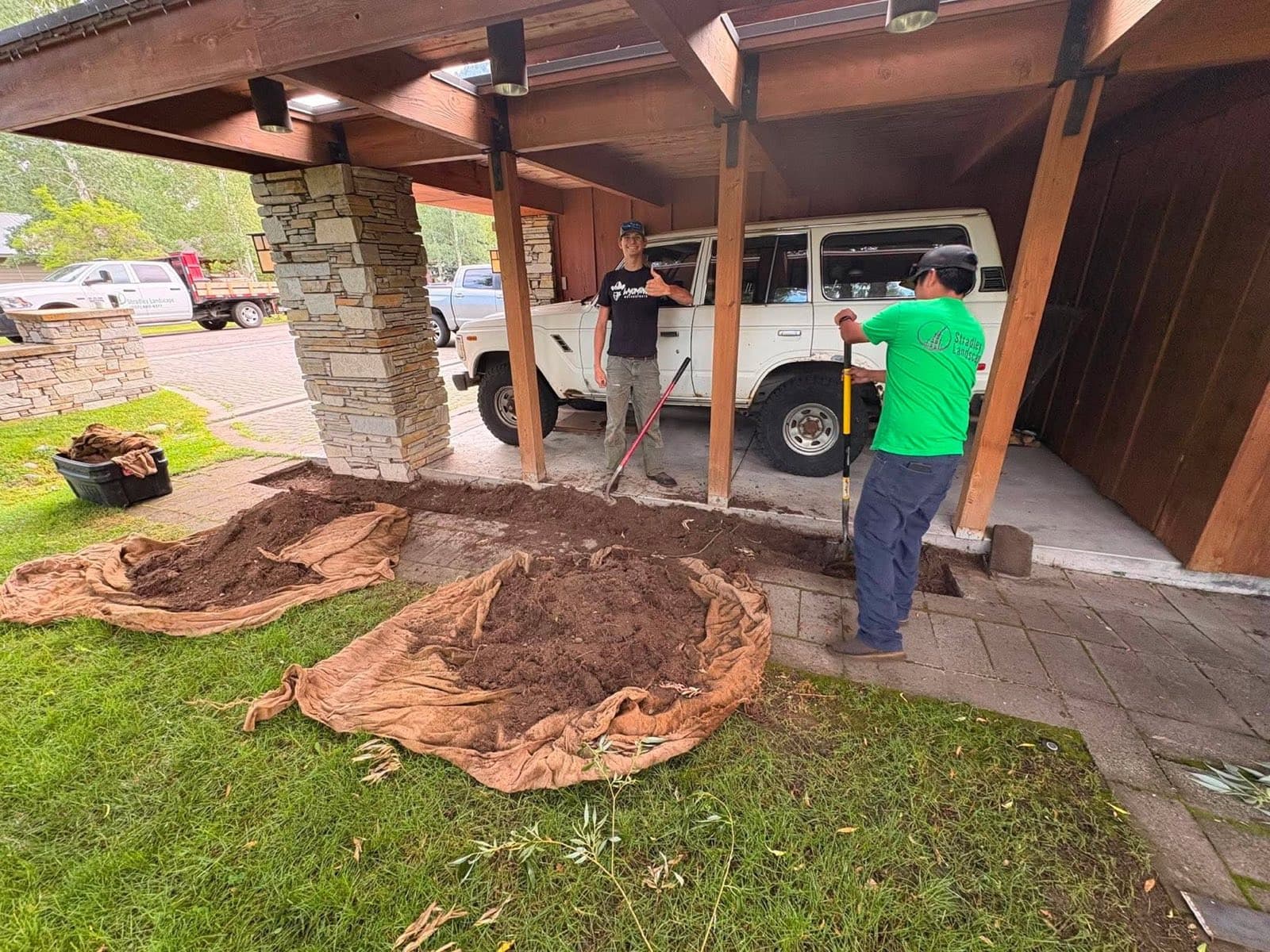
The most expensive tree is the one you plant twice. At just over 6,200 feet, with a short season, cold nights well into summer, and intense sun, Jackson is unforgiving of a species chosen off a photograph. What thrives in Denver or Salt Lake is not automatically going to make it here.
What the site decides before the species does
Before anyone talks about what to plant, the site answers most of the question. Exposure to wind, how much winter sun a south facing trunk takes, whether snow slides off a roof onto that spot, how the ground drains, and how close it sits to a drive that gets plowed and salted. A perfect species in the wrong spot still fails.
What generally does well here
- Native conifers suited to the elevation, which handle the cold and the snow load they evolved with
- Aspen, with the caveat that it suckers and spreads, so plant it where that is welcome rather than in a small bed
- Cold hardy deciduous species selected for the specific microclimate on your property
- Native shrubs, which are consistently underused and take the winter far better than ornamentals brought up from lower elevation
What tends to disappoint
- Anything rated for a milder zone, no matter how good it looks at the nursery
- Thin barked young trees on a south or southwest exposure without protection, where winter sun scald splits the bark
- Fruit and ornamental varieties bred for longer seasons, which will survive without ever really performing
- Fast growing shade trees planted close to a foundation or a drive, where the roots become an expensive problem later
Planting depth is where most trees are lost
More young trees die from being planted too deep than from cold. The root flare, the point where the trunk widens into the roots, belongs at or slightly above grade. Buried, it holds moisture against the trunk and the tree declines slowly over a few years while everyone blames the winter. Staking matters here too, because the wind will work a new planting loose before the roots take.
Timing
Spring after the ground thaws, and early fall with enough season left to root before freeze. A tree planted in late September at this elevation is a gamble. We will tell you honestly when the answer is to wait until spring rather than sell you something that goes in too late.
If you are planning plantings, we will walk the property and tell you what will actually live where you want it.